Source Automatic Pallet Plastic Waste Shredder for Buckets Baskets Bottles
Find 30 automatic pallet plastic waste shredder units with varying motor powers and shaft dimensions. Compare specifications for double-shaft and single-shaft models suitable for processing PP waste, buckets, and baskets.
Key considerations
Products List


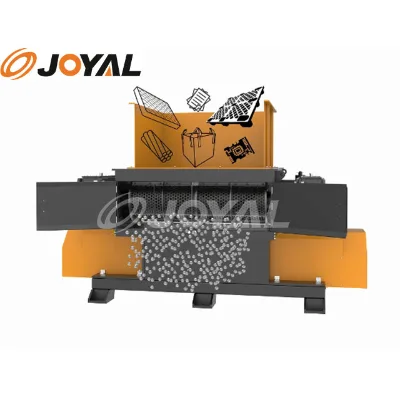


Plastic Crusher Shredder Machine and Crushing Shredder for Waste Recycling
$15000.00 - $300000.00
Moq: 1


Comprehensive Sourcing Guide
Strategic Sourcing Guide for Automatic Pallet Plastic Waste Shredders
Understanding the Core Technology and Configuration
When sourcing an automatic pallet plastic waste shredder, buyers must first distinguish between the specific mechanical architectures available in the current market. The supplied product data indicates a divergence in classification, with listings explicitly identifying "Double-Shaft Shredder" and "Double-Screw" configurations alongside "Single-Screw" options. This distinction is critical because the mechanical action differs significantly between these types. The "Double-Shaft" models, often categorized under "Claw Crusher" or "Flat Knife Crusher" depending on the blade geometry, utilize a "Double-Shaft" blade system designed for high-torque shearing. These units are frequently described as "Hard Plastic Crusher" machines, specifically tailored for the rigid nature of pallets and industrial containers.
In contrast, the presence of "Single-Screw" attributes in the same dataset suggests a hybrid or alternative processing line where extrusion or granulation follows the initial size reduction. For a dedicated shredding operation focused on pallets, the "Double-Shaft" configuration is generally the primary choice due to its ability to handle large, irregular loads without jamming. The "Structure" of these machines is often noted as "Top Feed," which facilitates the loading of bulky items like wooden or plastic pallets. The "Knife Roll" is specified as a "Solid Knife Roller," a design feature intended to maximize durability and cutting efficiency against tough materials. Buyers should verify whether the specific unit they are evaluating utilizes a "Claw Crusher" mechanism or a "Flat Knife Crusher" mechanism, as this dictates the particle size distribution and the subsequent handling requirements for the shredded output.
Technical Specifications and Performance Parameters
The technical specifications of an automatic shredder define its capacity and suitability for specific waste streams. Based on the observed data, the market offers models with varying dimensions and power ratings. For instance, the "WPS800" model features a "Main Shaft Length" of 820mm and a "Main Shaft Tactical Diameter" of 400mm, with a "Main Shaft Speed" of 78 Rpm. This configuration is paired with a "Motor Power" of 37 Kw and a "Hydraulic Power" of 3 Kw. The cutting chamber for this unit measures 800*800mm, and it utilizes 38 rotor blades and 2 fixed blades. The screen mesh diameter for this model ranges from 30 to 80mm, determining the maximum output particle size.
Larger capacity units, such as the "WPS1500," present a significant scale increase. This model boasts a "Main Shaft Length" of 1530mm and a "Main Shaft Tactical Diameter" of 500mm. The operational speed drops slightly to 72 Rpm, likely to manage the increased torque requirements. The power consumption is substantially higher, with "Motor Power" options listed as 90 Kw or 110 Kw, and "Hydraulic Power" rising to 11 Kw. The cutting chamber expands to 1400*1500mm, accommodating larger pallets or bulkier plastic waste. The blade configuration is more complex, with "Rotor Blades" listed as 66 or 99 pieces and "Fixed Blades" at 4. The screen mesh diameter for this larger unit ranges from 30 to 120mm.
A critical observation in the data is the variation in "Automation" status. While the core keyword implies "automatic" functionality, the dataset contains entries for both "Computerized: Computerized" and "Computerized: Non-Computerized" systems, alongside "Automation: Automatic" and "Automation: Automation." This suggests that "automatic" in this context may refer to the mechanical feeding or hydraulic operation rather than a fully computerized control loop. Buyers must clarify if the "Automatic" designation includes a PLC-based control system or if it refers to the self-feeding mechanism. Additionally, the "Voltage" requirements vary, with listings showing 200V, 380V, and 440V, necessitating a thorough review of the facility's electrical infrastructure before procurement.
Compliance, Certification, and Safety Standards
Ensuring that the machinery meets international safety and quality standards is a non-negotiable aspect of B2B procurement. The supplied facts explicitly list "CE" and "ISO9001" as certifications associated with these products. The "CE" marking indicates compliance with European health, safety, and environmental protection standards, which is often a prerequisite for importing machinery into many global markets. The "ISO9001" certification suggests that the manufacturer adheres to a quality management system, though buyers should verify the scope of this certification to ensure it covers the specific manufacturing processes of the shredder.
Safety is further addressed through specific design features. The data highlights "Safety Protection" in the form of a "Protective Cover," which is essential for shielding operators from moving parts and flying debris. The "Blade Material" is identified as "Alloy Steel," a choice that implies a balance between hardness and toughness, crucial for cutting hard plastics without rapid dulling. However, the "Standard" field in the data is listed as "Customized" or specific model numbers like "WPS600" and "WPS800," rather than a universal international standard like ISO or ASTM for the machine itself. This indicates that the "standard" compliance is often tied to the specific model design rather than a generic industry benchmark. Buyers must request the specific test reports or compliance documentation that validates the "CE" claim, as the presence of the keyword in a listing does not guarantee current certification status.
Cost Drivers and Pricing Dynamics
The pricing for automatic pallet plastic waste shredders is highly variable, influenced by the scale of the machine, the power of the motor, and the level of automation. The observed price range in the market spans from 1,000 USD to 370,000 USD. This wide disparity reflects the difference between smaller, single-shaft or basic double-shaft units and large-scale industrial shredders with high horsepower motors and advanced hydraulic systems. The "WPS800" model, with its 37 Kw motor, likely falls on the lower end of this spectrum, while the "WPS1500" with its 90-110 Kw motor and larger cutting chamber would command a significantly higher price point.
Several factors drive these costs. The "Motor Power" is a primary cost driver; a jump from 37 Kw to 110 Kw represents a substantial increase in material and manufacturing costs. The "Blade System" complexity also affects pricing; units with 99 rotor blades versus 38 blades require more raw material and precision machining. Furthermore, the "Customization" availability allows buyers to tailor the machine to specific needs, which invariably increases the unit price compared to standard off-the-shelf models. The "Voltage" requirements can also impact cost, as specialized transformers or electrical components may be needed for 440V systems.
The "MOQ" (Minimum Order Quantity) for these machines is observed to be 1, indicating that buyers can procure a single unit without needing to commit to a bulk order. This flexibility is beneficial for small to medium-sized recycling facilities. However, the "Lead Time" and "Production Name" variations suggest that custom orders may require longer manufacturing windows. Buyers should be aware that the "Price" is likely ex-factory or FOB, and shipping costs for a machine of this size and weight will be a significant additional expense. The "Packing" method, described as "Wooden Pallet with Film" or "Plastic Film Winding Packaging," is designed to protect the unit during transit but adds to the overall weight and volume, influencing freight charges.
Typical Applications and Material Compatibility
The primary application for these shredders is the processing of "Waste Plastic," specifically targeting items like "Plastic Bucket" and "Plastic Basket." The data explicitly mentions "PP" (Polypropylene) as a compatible "Plastic Type," which is a common material for pallets, crates, and heavy-duty containers. The "Type" is defined as "Hard Plastic Crusher," confirming that these machines are engineered for rigid materials rather than soft films or flexible plastics. This distinction is vital for buyers; using a hard plastic shredder for soft films may result in inefficient processing or machine damage.
The "Screen Mesh Diameter" range of 30-120mm allows for flexibility in the output size, which can be adjusted based on the downstream processing requirements. For example, a smaller mesh size (30mm) is suitable for granulation processes that require fine particles, while a larger mesh (120mm) is appropriate for direct baling or further mechanical separation. The "RAM Travel" specification, ranging from 800mm to 1400mm, indicates the capacity of the hydraulic system to push material into the cutting chamber, which is essential for handling bulky pallets that might otherwise jam the machine.
The "Application" field also notes "Waste Plastic" as a broad category, but the specific mention of "Plastic Bucket" and "Plastic Basket" suggests a focus on post-consumer or post-industrial rigid packaging waste. The "Top Feed" structure is particularly advantageous for these applications, as it allows operators to easily load large, flat items like pallets without the need for complex feeding conveyors. The "Automatic" nature of the machine ensures continuous operation, making it suitable for high-volume recycling facilities that process large quantities of pallet waste daily.
Supplier Evaluation and Quality Assurance
When evaluating suppliers for automatic pallet plastic waste shredders, buyers must look beyond the basic product listings and assess the manufacturer's capability to deliver consistent quality. The "Location" of the products is listed as "China," which is a major hub for industrial machinery manufacturing. However, the "Customization" and "Standard" fields suggest that many suppliers offer tailored solutions rather than mass-produced standard units. Buyers should verify the supplier's track record in producing "Double-Shaft Shredder" machines and their ability to meet the specific "Standard" requirements of their region.
Quality control should focus on the "Blade Material" and the "Blade System." The use of "Alloy Steel" for blades is a positive indicator, but buyers should request material certificates to confirm the grade and hardness of the steel. The "Fixed Blades" and "Rotor Blades" count and arrangement are critical for the machine's longevity; a higher number of blades, as seen in the WPS1500 model, may offer better wear distribution but requires more precise manufacturing. The "Safety Protection" features, such as the "Protective Cover," must be robust and compliant with local safety regulations.
Buyers should also scrutinize the "Automation" and "Computerized" claims. If a supplier claims "Computerized" operation, they should provide details on the control system, including the PLC brand, HMI interface, and diagnostic capabilities. The "Non-Computerized" options may be suitable for simpler applications but lack the data logging and remote monitoring features of advanced systems. The "Production Name" and "Model" consistency are also important; discrepancies between the listed model (e.g., WPS800) and the actual product standard (e.g., WPS600) could indicate a mismatch in specifications or a potential error in the listing.
Long-Term Procurement and Operational Considerations
Procuring an automatic pallet plastic waste shredder is a long-term investment that requires careful consideration of maintenance, spare parts availability, and operational efficiency. The "Customized" nature of the "Power" and "Standard" means that spare parts, such as specific "Blades" or hydraulic components, may not be universally interchangeable across different models. Buyers should negotiate a spare parts package at the time of purchase, ensuring that critical components like the "Alloy Steel" blades and hydraulic seals are readily available.
The "Hydraulic Power" requirements, ranging from 3 Kw to 11 Kw, indicate that the hydraulic system is a key component of the machine's operation. Regular maintenance of the hydraulic fluid and seals is essential to prevent downtime. The "Main Shaft Speed" and "Motor Power" ratings suggest that the machine will operate under significant load, making the quality of the bearings and the alignment of the shafts critical for long-term performance. Buyers should inquire about the expected lifespan of the "Blade System" and the frequency of blade replacement required for different waste types.
Furthermore, the "Packing" method, whether "Wooden Pallet with Film" or "Plastic Film Winding Packaging," should be evaluated for its suitability for the intended shipping route. Improper packing can lead to damage during transit, resulting in costly repairs and delays. The "Lead Time" for custom orders should be clearly defined in the contract, as the "Customized" status implies a longer manufacturing period than standard models. Finally, buyers should consider the energy efficiency of the "Motor Power" and the "Voltage" compatibility to ensure that the machine integrates seamlessly into their existing facility infrastructure, minimizing operational costs over the machine's lifecycle.
FAQs
What automation levels are available for these shredders?
Both automatic and non-computerized automation levels are available for these shredders. Some units feature computerized systems while others rely on manual or hydraulic operation, so buyers must verify the specific control type before purchase.
Which blade materials are used in the cutting system?
The cutting system uses alloy steel for both rotor and fixed blades. This material choice ensures durability and hardness required for shredding hard plastics like PP buckets and baskets without rapid dulling during operation.
What voltage options support the motor power requirements?
The machines support 200V, 380V, and 440V voltage options to match facility infrastructure. Buyers must confirm their electrical supply matches the specific model requirements before installation to ensure safe and efficient operation.
Can these machines process plastic buckets and baskets effectively?
Yes, these machines are designed specifically for waste plastic including buckets and baskets. They function as hard plastic crushers capable of handling rigid materials like PP with top feed structures for bulky items.
What certifications verify the safety and quality standards?
CE and ISO9001 certifications are listed for these products to verify safety and quality. Buyers should request specific test reports to confirm current compliance status rather than relying solely on the presence of these keywords.
How does the screen mesh diameter affect output size?
The screen mesh diameter ranges from 30 to 120mm depending on the model. This range allows adjustment of the maximum output particle size to suit downstream granulation or baling requirements for different recycling workflows.